
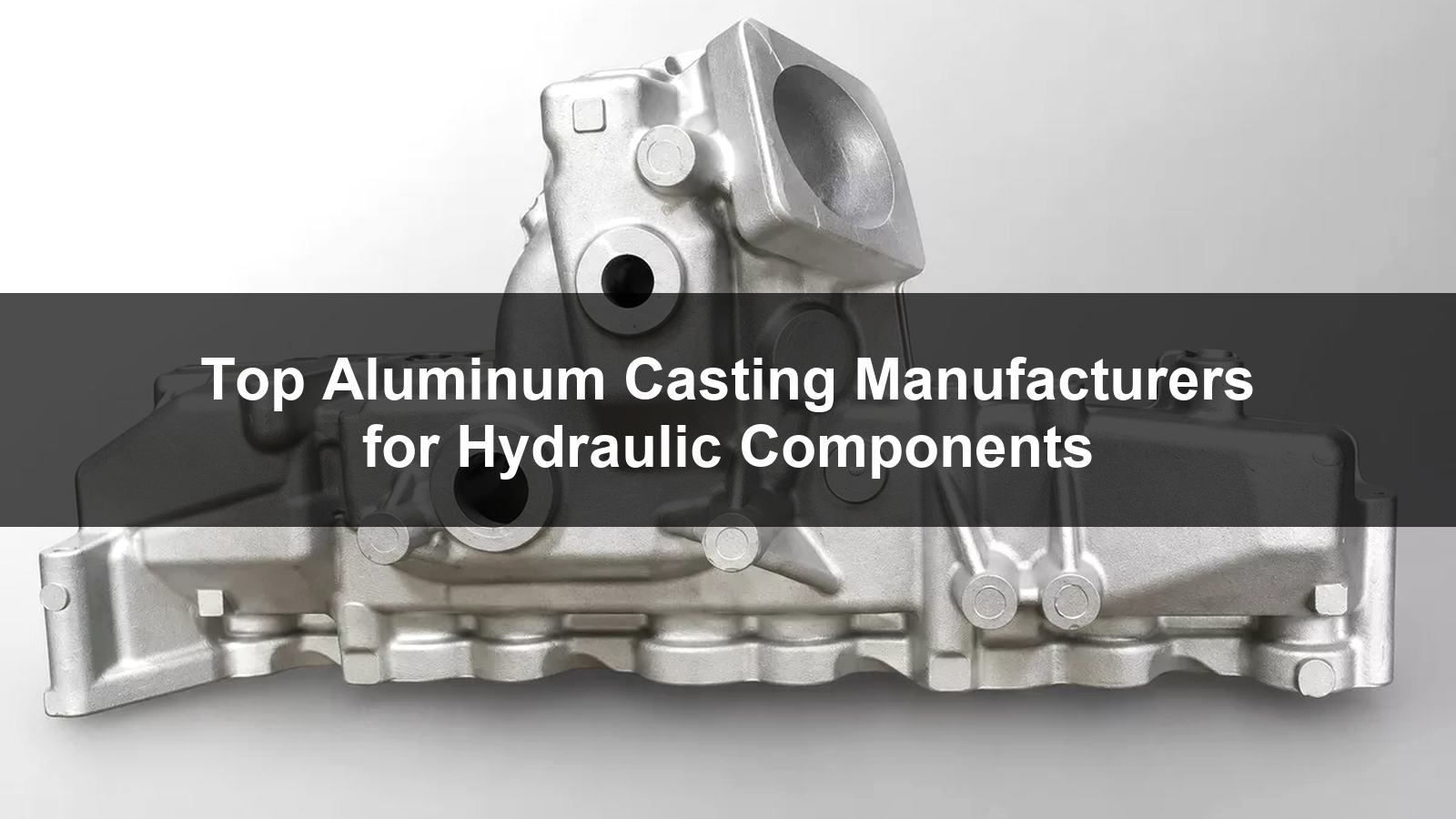
Are you looking for a reliable aluminum casting manufacturer for hydraulic components such as valve housings, manifold blocks and pump parts? Do you want a foundry that delivers pressure-tight, precisely machined castings with clean internal passages and dependable sealing faces? Or are you hoping to work with a supplier that can handle tooling, casting, CNC machining and leak testing under one roof?
If the answer is yes, then the global market for aluminum casting manufacturers serving hydraulics spans Asia and Europe, with suppliers ranging from high-pressure die casters to gravity and low-pressure foundries. Below, we present leading aluminum casting manufacturers for hydraulic components to help you compare capabilities and shortlist the right partner for your fluid-power program.
Quick Navigation
- Kast Mfg (Kast Die Cast)
- FUERD
- Difon Machining
- Yile Machinery
- Matech (MPI Die Casting)
- Domnik Industries
- Shuangcheng (Hzyazhu)
- Shreeniwas Cast Tech
- Castman India
- Ascot Technotech
1. Kast Mfg (Kast Die Cast)
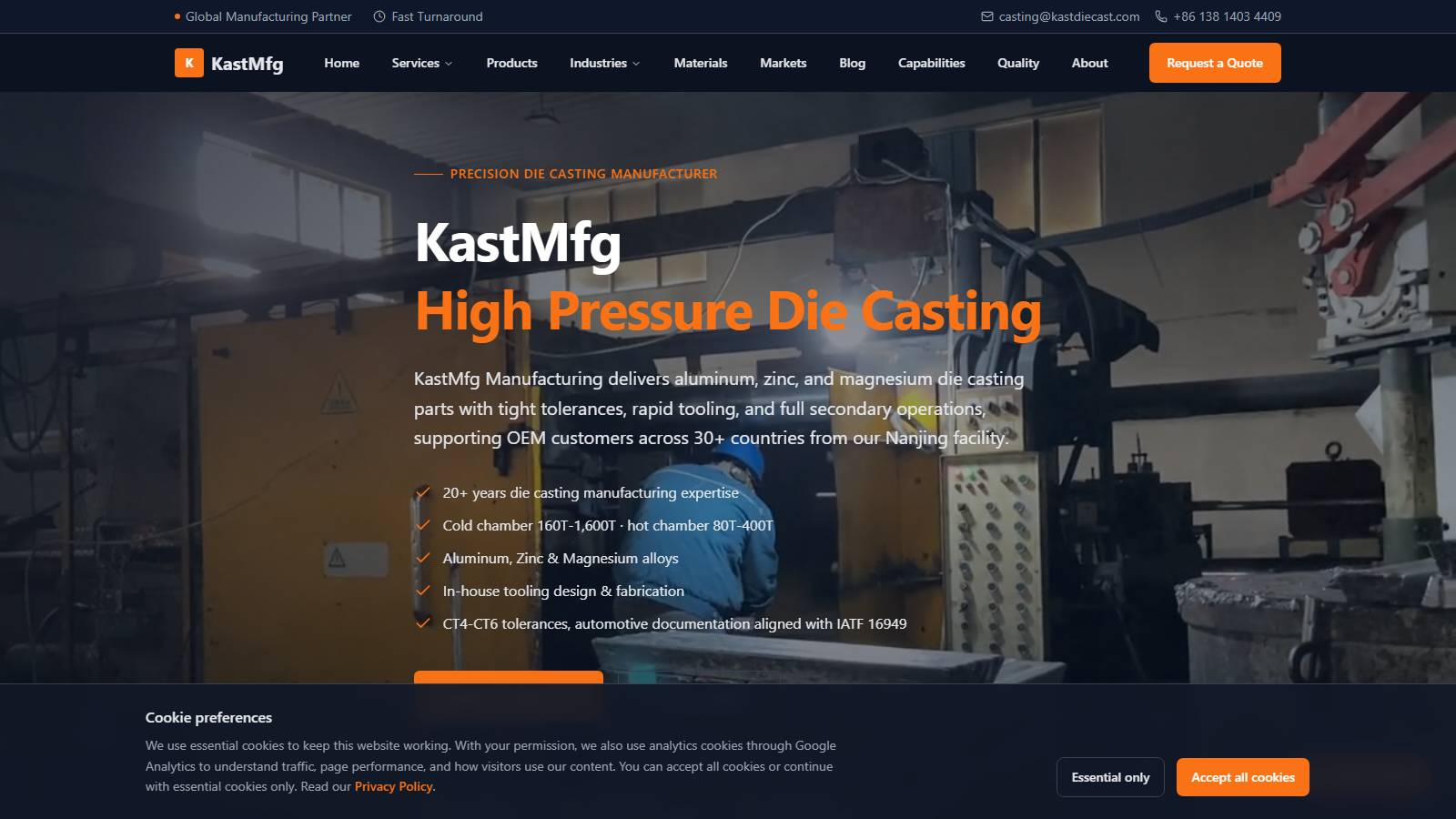
Website: https://kastdiecast.com/
Headquarters / Supply Model: Nanjing, China. KastMfg is a high-pressure die casting manufacturer working in aluminum, zinc and magnesium, with cold-chamber machines from 160T to 1,600T, in-house tooling design and fabrication, and full secondary operations. Its quality system is documented with reference to IATF 16949, and it reports export programs across 30+ countries.
Core Products / Technologies: The industrial-equipment range explicitly covers hydraulic manifolds, valve bodies, motor housings and pump covers. A cited program held a 12-port hydraulic manifold to CT4 using in-house casting plus CNC machining in ADC12 aluminum, presented as a single-vendor solution. Services include aluminum HPDC (A380, A360, ADC12), die-casting tooling, CNC machining and surface finishing.
Why Consider Kast Mfg: For hydraulic buyers, the combination of a dedicated manifolds-and-valve-bodies product line with in-house tooling and CNC machining means fluid passages and port features can be cast and finished under one accountable roof, reducing coordination between separate foundry and machine shops.
Best Suited For: Industrial-equipment and fluid-power OEMs needing aluminum hydraulic manifolds, valve bodies and pump covers, especially multi-port parts where casting plus CNC in one program helps control dimensional consistency.
Before Purchasing: Confirm the alloy (for example ADC12 or A380), port count and thread specification, required pressure or leak test, CT tolerance class, whether CNC machining and impregnation are included, and MOQ and lead time for both tooling and parts.
2. FUERD
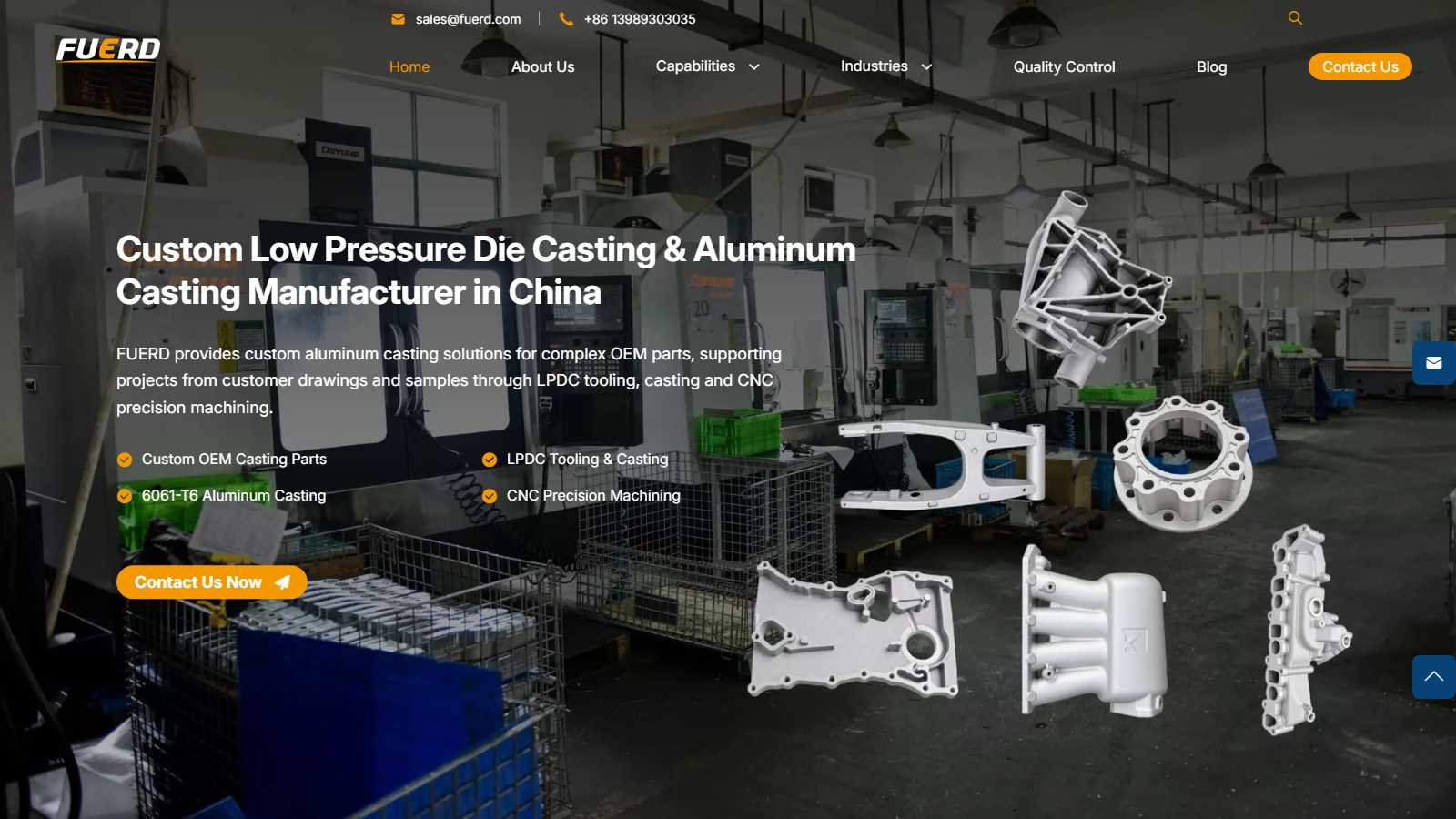
Website: https://www.fuerdcasting.com/
Headquarters / Supply Model: Ningbo, Zhejiang, China. FUERD (Ningbo FUERD Machinery) is a custom aluminum casting manufacturer founded in 2008 with in-house LPDC tooling development, integrating mold design, casting, CNC machining and finishing under one roof.
Core Products / Technologies: Custom low-pressure casting molds and serial aluminum parts; H13 steel, ductile iron and water-cooled mold options; side-slider and sand-core mold solutions; CAD/CAM/CAE full-process development. FUERD also provides LPDC, gravity casting, 6061-T6 semi-solid die casting (Rheocasting) and CNC precision machining, with casting capacity up to 200 kg, thin-wall capability down to 3.5 mm, 100% X-ray inspection and APQP/FMEA/PPAP control.
Why Consider FUERD: For hydraulic components, the relevant directions include hydraulic valve housings, hydraulic manifold blocks, oil-circuit parts and hydraulic pump housings, where internal passages and sealing surfaces demand sound castings. Combining tooling and serial production in one workflow helps buyers move from drawings to stable mass production without coordinating separate mold and foundry shops.
Best Suited For: Hydraulic component makers and fluid-power OEMs that need custom aluminum cast and machined valve housings, manifold blocks, oil-circuit parts or pump housings, and prefer a single accountable supplier for both tooling and production.
Before Purchasing: Confirm the target alloy, mold material choice (H13, ductile iron or water-cooled), side-slider or sand-core requirements, T6 heat treatment and X-ray scope, and clarify MOQ and lead time for both the mold and the production parts.
3. Difon Machining
Website: https://www.difonmachining.com/
Headquarters / Supply Model: Qingdao, China. Founded in 2014, Qingdao Difon Machinery (export brand "Difon Baysun") combines aluminum die casting with sheet metal, stamping, welding and precision machining, positioning itself as a one-stop hydraulic-parts manufacturer from raw casting to finished component.
Core Products / Technologies: Featured products include hydraulic valve blocks, accumulator charging valves, brake proportioning valves and hydraulic motors. The company describes CNC machining, honing to around ±0.002 mm, CMM inspection and multi-stage testing for hydraulic components, with a stated focus on burr-free machining of internal passages.
Why Consider Difon Machining: Hydraulic valve blocks and fluid-power parts are a core line rather than a side business. For buyers concerned about cross-port burrs, cleanliness and dimensional accuracy, the combination of casting, honing and inspection on one site addresses the failure modes that matter most in valve-block applications.
Best Suited For: Buyers sourcing complete hydraulic valve blocks, accumulator and brake valve components, or one-stop cast-and-machined fluid-power parts with documented inspection.
Before Purchasing: Confirm whether the block is die cast, forged or machined from bar, the working pressure and port standards, honing and cleanliness requirements, which inspections (CMM, NDT, leak, functional) are included, and the relevant certification scope.
4. Yile Machinery
Website: https://www.yilemachinery.com/
Headquarters / Supply Model: Luoyang, China. Yile Machinery supplies OEM/ODM custom parts and lists a dedicated high-pressure die casting line for hydraulic and pneumatic valve bodies among its product range, offering a mold-to-machined service for fluid-power components.
Core Products / Technologies: The hydraulic and pneumatic valve-body line describes complex aluminum castings with internal fluid passages, using HPDC machines from 280T to 2000T in alloys such as ADC12 and A380, with mold-flow simulation, CNC machining of ports and spool bores, pressure-decay leak testing, impregnation and conversion or powder coating. Related listings cover hydraulic valve bodies and manifold blocks in aluminum grades including 6061/7075.
Why Consider Yile Machinery: The offering is framed around pressure tightness and assembly readiness, which are the decisive requirements for valve bodies and manifolds. Buyers can request DFM input and a leak-tested finished part rather than a bare casting, shortening the path to a production-ready component.
Best Suited For: Fluid-power OEMs needing high-volume aluminum hydraulic or pneumatic valve bodies and manifold blocks as fully machined, leak-tested parts.
Before Purchasing: Confirm the alloy, machine tonnage and part envelope, required leak-test method and acceptance criteria, whether impregnation or coating is included, and the meaning of pressure ratings quoted for the specific design.
5. Matech (MPI Die Casting)
Website: https://mdiecasting.com/
Headquarters / Supply Model: China-based Matech Industry Ltd. provides a one-stop metal-parts service covering casting and forging, precision machining and surface treatment, with process design, quality planning and final inspection kept in house. It states more than 15 years of manufacturing experience and monthly capacity above 1,000 tons.
Core Products / Technologies: Product listings include a custom precision die-cast hydraulic valve body, aluminum die-casting valve parts, valve housings, oil pump housings and coolant pump housings. Processes span die casting, permanent/gravity casting, low-pressure and high-pressure casting on 220T, 400T and 800T machines, with A356/ZL101 and AlSi7Mg alloys, CT4–CT6 blank tolerances, T5–T6 heat treatment and CNC machining down to around 0.005–0.01 mm.
Why Consider Matech: The breadth of casting routes lets buyers match the process to the part, from pressure-tight valve bodies to larger pump housings, while keeping tooling, casting, machining and finishing in one chain. In-house spectrometry and ultrasonic NDT support material and defect control.
Best Suited For: Buyers needing custom hydraulic valve bodies, valve or pump housings across different casting processes and volumes, with machining and finishing handled by the same supplier.
Before Purchasing: Confirm the recommended casting process for your part, alloy and heat-treat condition, blank and machined tolerances, NDT and leak-test scope, tooling ownership and sample approval steps before ordering.
6. Domnik Industries
Website: https://domnik-industries.com/
Headquarters / Supply Model: Germany. Domnik Industries Germania GmbH is a German aluminum foundry and manufacturer of industrial valves and fittings (Armaturen), reporting an ISO 9001:2015 quality system. Its traditional customers come from the energy sector, shipbuilding and the German rail network, with deliveries across Europe and overseas.
Core Products / Technologies: The foundry produces custom aluminum castings to DIN EN 1706 in gravity die casting (0.05–25 kg), machine and hand sand casting (up to 50 kg for hand molding), with optional T6 heat treatment and fine blasting, at a stated output of 5–6 tonnes of aluminum per month. Alongside castings, it manufactures valve and fitting products, including thermal capsule condensate traps.
Why Consider Domnik Industries: European buyers who want locally produced aluminum castings plus valve and fluid-control component experience may find a useful fit, particularly for low-to-medium-volume custom parts where German foundry oversight and pattern-making support reduce development friction.
Best Suited For: European buyers needing custom aluminum castings for valves, fittings or fluid-control assemblies, including energy, marine and rail-related components.
Before Purchasing: Because the published product focus is valves, fittings and custom castings rather than a dedicated hydraulic manifold line, confirm whether your specific hydraulic housing or manifold is in scope, the alloy and weight range, heat treatment, test certificates and any required approvals.
7. Shuangcheng (Hzyazhu)
Website: https://en.hzyazhu.com/
Headquarters / Supply Model: Huizhou, Guangdong, China. Huizhou Shuangcheng Hardware Die-Casting Products Co., Ltd. has focused on precision zinc and aluminum die casting and CNC machining since 2007, running an integrated die-casting-plus-CNC operation with its own mold design and surface-treatment chain.
Core Products / Technologies: Listed products include custom aluminum die-cast motor end covers and flange seats used as hydraulic or pneumatic valve bodies, CNC-machined precision valve-body housings, and pneumatic valve manifolds plus precision aluminum hydraulic fluid components. Aluminum die-casting machines range from 200T to 800T, with polishing, deburring, CNC and lathe machining, surface treatment and final inspection in house.
Why Consider Shuangcheng: The combination of die casting and turn-mill CNC machining suits compact valve bodies and manifolds where ports, threads and sealing faces must be finished after casting. Buyers can consolidate tooling, casting and machining in a single Huizhou facility.
Best Suited For: Buyers needing custom aluminum hydraulic or pneumatic valve bodies, flange-type manifolds and fluid components with integrated CNC finishing.
Before Purchasing: Confirm the alloy, whether the part is die cast or machined from stock, machine tonnage and size limit, port and thread standards, deburring and cleanliness controls, leak-test expectations and the quality certifications applicable to your program.
8. Shreeniwas Cast Tech
Website: https://www.shreeniwascasttech.in/
Headquarters / Supply Model: Chakan, Pune, Maharashtra, India. Established in 2013, Shreeniwas Casttech Industries is an Indian manufacturer of precision aluminum gravity die castings, die making, pattern development and CNC-machined components, serving automotive, electrical, industrial-machinery, hydraulic, agriculture and engineering sectors.
Core Products / Technologies: Services cover aluminum gravity die casting, shell-core casting, die making, electric-motor body casting and CNC/VMC machining. The product range includes manifold die casting, valve casting and suction manifolds, alongside inspection steps such as chemical analysis, dimensional and surface-finish checks, material traceability and final inspection.
Why Consider Shreeniwas Cast Tech: In-house die making and pattern development combined with gravity die casting and machining suits hydraulic manifolds and valve castings that need cored internal passages and consistent sealing faces, with development and production kept under one Indian roof.
Best Suited For: Buyers seeking Indian-made gravity die cast manifolds, valve castings and pump or motor-body components with tooling and CNC finishing available on site.
Before Purchasing: Confirm the alloy, whether shell cores are needed for your passage geometry, casting weight range, CNC scope and tolerances, inspection and traceability documentation, and how tooling cost and ownership are structured.
9. Castman India
Website: https://castmanindia.com/
Headquarters / Supply Model: Coimbatore, Tamil Nadu, India. Castman Technologies is an aluminium high-pressure die casting manufacturer with an ISO 9001:2015-certified plant, running fully automatic TOYO presses (250T and 350T) and adding trimming, shot blasting and CNC turning capability in stages.
Core Products / Technologies: The hydraulics and pneumatics sector covers swivel flanges, cylinder end covers and valve bodies. The plant describes per-melt OES spectrometry, rotary degassing and reduced-pressure hydrogen testing before casting, flow simulation ahead of tooling, walls down to about 1.5 mm with ±0.1 mm tolerances, and wet and dry leak testing for pressure-critical parts such as pneumatic cylinder covers and brake valve bodies.
Why Consider Castman India: The front-loaded melt verification and leak testing are directly relevant to hydraulic castings, where porosity drives leakage failures. Buyers also get simulation and a single plant for casting, finishing and inspection, with a stated willingness to quote small first batches.
Best Suited For: Buyers needing leak-proof aluminum valve bodies, cylinder covers and flanges, including new programs that want to validate a part on a modest initial order before scaling.
Before Purchasing: Confirm the alloy family, part weight and envelope against press capacity, required leak-test method and acceptance level, tolerance and wall-thickness targets, surface-treatment arrangements and the tooling and piece price together.
10. Ascot Technotech
Website: https://ascottechnotech.com/
Headquarters / Supply Model: Rajkot, Gujarat, India. Ascot Technotech is an ISO 9001:2015-certified manufacturer and supplier of precision-engineered components in ferrous and non-ferrous materials, combining casting, forging and machining with in-house CNC/VMC equipment, an assembly shop and an inspection lab.
Core Products / Technologies: Capabilities include sand casting (0.5 kg to 5 ton), investment casting, aluminium gravity and pressure die casting, forging and bar-stock machining. The industries served list hydraulic precision manifolds, cylinders and housings, plus valve bodies, bonnets and trim components and pump impellers, casings and housings, supported by CAD/CAM-based development.
Why Consider Ascot Technotech: The wide process range lets buyers source a hydraulic manifold, valve body or pump housing through whichever route best fits the material, size and volume, while keeping machining and inspection under one Indian operation.
Best Suited For: Buyers needing cast and machined hydraulic manifolds, cylinders, valve bodies or pump housings across varied materials and part sizes from a single supplier.
Before Purchasing: Confirm which process is proposed for your part and why, the material grade and any hydraulic-specific testing, tolerance and machining scope, inspection reports available, and export-packaging and documentation support for your region.
Key Factors That Affect Your Price
Aluminum casting quotes for hydraulic components vary with engineering scope, so compare like for like before choosing. Two "valve housings" can differ sharply in what the price actually includes.
- Casting process: High-pressure die casting favors high-volume, thin-wall valve bodies, while low-pressure, gravity and sand casting often suit thicker, sounder manifolds and housings; tooling and per-part economics differ.
- Alloy and heat treatment: ADC12 or A380 suit pressure-tight die castings, while A356-T6 or 6061-T6 offer heat-treatable strength; semi-solid Rheocasting and T6 treatment add capability and cost.
- Pressure tightness and porosity control: Melt degassing, mold-flow simulation, impregnation and 100% X-ray or pressure-decay leak testing raise cost but directly reduce leakage failures in fluid-power parts.
- Machining and cleanliness: Cross-drilled ports, spool bores and sealing faces held to tight tolerances need multi-axis CNC, honing and thorough deburring, which add cost versus as-cast surfaces.
- Inspection and documentation: CMM, NDT, functional testing and APQP/FMEA/PPAP packages add overhead, mostly for automotive-grade or safety-critical hydraulic programs.
- Tooling, finishing and logistics: Mold material (H13, ductile iron or water-cooled), side sliders and sand cores, surface treatment, export packing and spare tooling affect total cost beyond the piece price.
FAQs – Aluminum Casting for Hydraulic Components
1. Which casting process is best for hydraulic valve bodies and manifold blocks?
High-pressure die casting suits high-volume, thin-wall valve bodies, while low-pressure or gravity casting often suits thicker manifolds needing sound internal passages and heat treatment. The right choice depends on pressure, wall thickness and volume.
2. What aluminum alloy should I specify for hydraulic castings?
ADC12 or A380 are common for pressure-tight die castings, while A356-T6 or 6061-T6 offer heat-treatable strength for housings and manifolds. Confirm the alloy with the foundry based on pressure and finishing needs.
3. How do suppliers ensure aluminum hydraulic castings are leak-proof?
They control porosity through melt degassing and mold-flow design, then verify parts with X-ray, pressure-decay leak testing or impregnation. Confirm which tests are standard and what acceptance criteria and reports apply.
4. Why does deburring matter so much in hydraulic valve castings?
Burrs in cross-drilled passages can damage seals, contaminate fluid and cause spool sticking. Ask suppliers how they deburr and clean internal channels and how cleanliness is verified before shipment.
5. What should I send when requesting a quote for a hydraulic casting?
Send 3D drawings, target alloy, part weight and wall thickness, working pressure, port and thread standards, annual volume, required tolerances, leak-test needs and delivery location so suppliers can return a comparable quote.
6. Can side sliders and sand cores form internal hydraulic oil passages?
Yes. Side-slider and sand-core tooling can create complex internal channels and mounting features in a single near-net-shape casting. Share your passage layout early so the foundry can confirm feasibility and tooling approach.
Who Is the Best Aluminum Casting Manufacturer for Hydraulic Components?
There is no single best supplier for every hydraulic program. The right choice depends on part geometry, alloy, pressure and leak-test requirements, volume and regional support, so the shortlist above is best used as a starting point for comparison.
FUERD is a strong option for buyers who want custom aluminum hydraulic valve housings, manifold blocks, oil-circuit parts and pump housings from one supplier, backed by in-house LPDC tooling, 6061-T6 semi-solid (Rheocasting), side-slider and sand-core molds, 100% X-ray inspection and APQP/FMEA/PPAP control.
To discuss a project with FUERD, provide your 3D drawings, target alloy, part weight and wall thickness, working pressure, port specification, mold-material preference, X-ray and heat-treatment scope, annual volume and delivery location.
Notice: Ensure your image is no larger than 2MB before uploading.