
Are you looking for reliable automotive castings manufacturers for engine, transmission, chassis, suspension, or electric vehicle components? Do you need a casting partner with consistent dimensional accuracy, mechanical performance, and dependable production quality? Or are you seeking customized aluminum casting solutions that support your drawings, material requirements, and OEM production plans?
If the answer is yes, then the global automotive casting industry offers a wide range of manufacturing partners with different materials, casting processes, engineering capabilities, and production scales. From international automotive suppliers to specialized aluminum casting manufacturers, buyers can compare potential partners according to their component requirements and project priorities. Below, we introduce 10 Automotive Castings Manufacturers to help OEMs, Tier 1 suppliers, engineering teams, and purchasing professionals identify suitable sourcing options.
Quick Navigation
- Rheinmetall (KS AluTech Group)
- Linamar Corporation
- Martinrea International
- FUERD Machinery
- Ryobi Limited
- Bocar Group
- AISIN Corporation
- CIE Automotive
- Endurance Technologies
- Rockman Industries
- Key Factors That Affect Automotive Casting Prices
- FAQs – Automotive Castings
- Who Is the Best Automotive Castings Manufacturer?
1. Rheinmetall (KS AluTech Group)
Headquarters / Supply Model: Rheinmetall is a Germany-based technology group with automotive casting operations through its KS AluTech Group. Its casting business operates at German locations including Neckarsulm, Langenhagen, and Walldürn, supplying aluminum components to automotive customers. Its services cover component development, industrialization, production start-up, and series manufacturing.
Core Products / Technologies: Its automotive casting portfolio includes cylinder crankcases, cylinder heads, structural components, cross members, suspension components, transmission housings, and electric mobility parts such as stator housings and battery trays. Casting technologies include high-pressure die casting, low-pressure die casting, sand casting, and gravity die casting. Additional operations include machining, surface coating, honing, and assembly.
Why Consider Rheinmetall: Rheinmetall is worth evaluating for projects involving large or complex aluminum castings. Its combination of casting technologies, machining, and engineering support can help customers coordinate component development and production. Its portfolio covers both conventional powertrain applications and electric mobility components.
Best Suited For: Automotive OEMs and Tier 1 suppliers sourcing aluminum engine blocks, cylinder heads, structural and chassis components, transmission housings, battery trays, and other lightweight castings.
Before Purchasing: Confirm the production location, casting process, alloy, component dimensions, machining scope, and available capacity. Clarify mechanical performance, tolerances, testing procedures, surface treatment, and quality documentation before tooling approval.
2. Linamar Corporation
Headquarters / Supply Model: Linamar Corporation is a Canadian manufacturing company with global operations in mobility and industrial markets. Its casting activities form part of a broader manufacturing and engineering network supporting automotive and other demanding applications.
Core Products / Technologies: Linamar's casting capabilities include aluminum and ductile iron casting. Aluminum processes include gravity die casting, low-pressure die casting, and high-pressure die casting. Its capabilities also cover complex structural components, tooling, engineering simulation, machining, and process control.
Why Consider Linamar Corporation: Linamar combines casting with engineering, tooling, machining, and assembly capabilities. This integrated approach helps buyers evaluate component design, material selection, manufacturing feasibility, and downstream processing within a broader production program.
Best Suited For: Automotive OEMs and Tier 1 suppliers seeking aluminum or ductile iron castings, lightweight structural components, chassis-related parts, and integrated manufacturing support.
Before Purchasing: Specify the required material, casting process, part geometry, structural loads, tolerances, tooling requirements, machining scope, and annual demand. Confirm that the selected facility can support the required production and validation work.
3. Martinrea International
Headquarters / Supply Model: Martinrea International is headquartered in Vaughan, Ontario, Canada. It is a global automotive supplier with manufacturing and engineering operations in several countries. Its lightweight structures and propulsion systems businesses include aluminum casting and related manufacturing activities.
Core Products / Technologies: Through its aluminum operations, including Martinrea Honsel, the company offers automotive aluminum casting and machining solutions. Its manufacturing processes include high-pressure die casting, low-pressure die casting, and sand casting. Relevant products include subframes, knuckles, control arms, structural nodes, shock towers, torque boxes, and cross members.
Why Consider Martinrea International: Martinrea is relevant to projects where cast components form part of a larger lightweight vehicle structure or suspension assembly. Its experience in casting, machining, joining, and structural manufacturing can support buyers seeking more than standalone raw castings.
Best Suited For: Automotive OEMs and Tier 1 suppliers sourcing aluminum structural components, suspension parts, subframes, and engineered lightweight assemblies.
Before Purchasing: Clarify whether the project requires a raw casting or a machined and assembled component. Specify structural loads, fatigue requirements, alloy, heat treatment, tolerances, joining methods, corrosion protection, and inspection standards.
4. FUERD Machinery
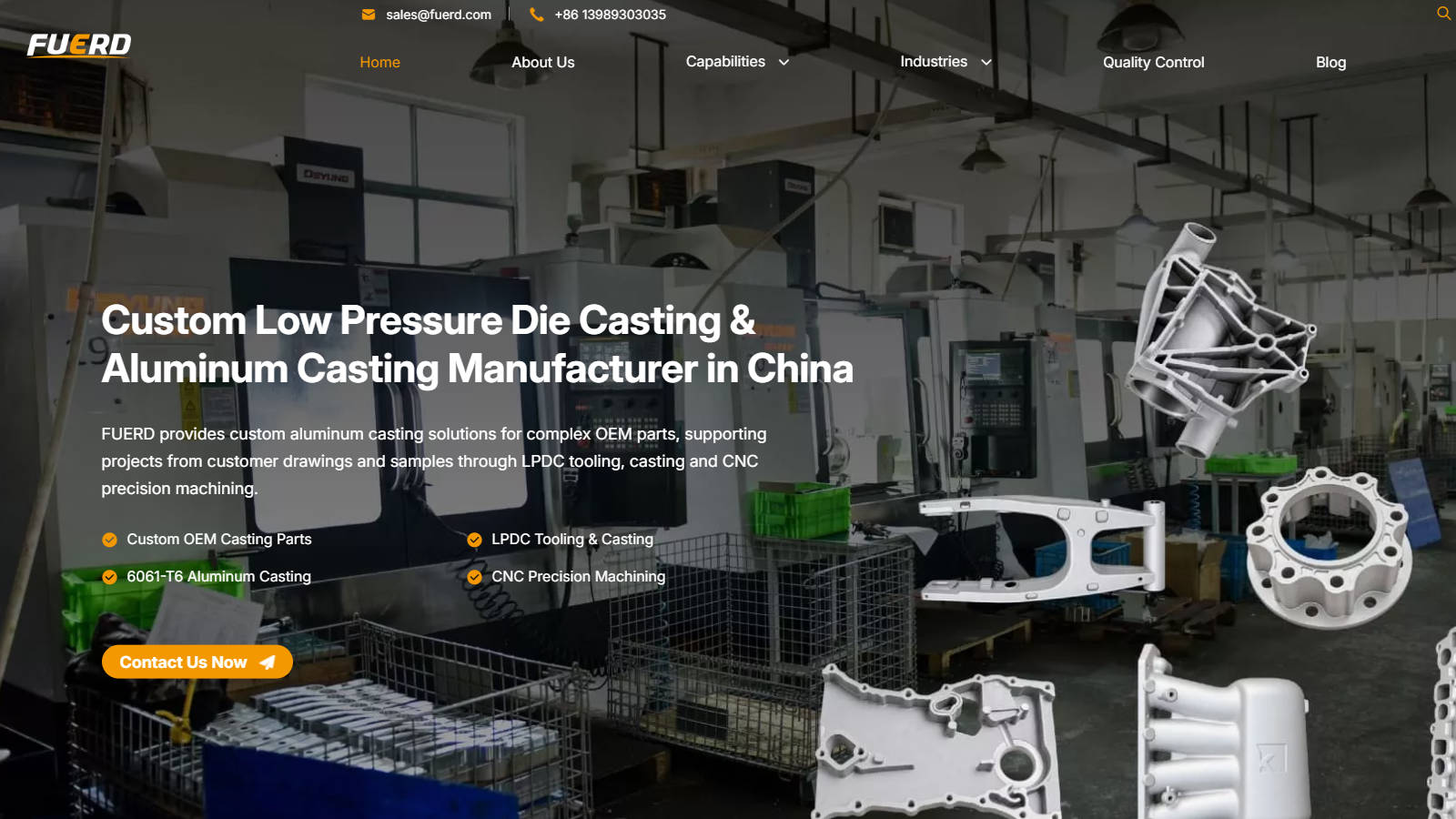
Headquarters / Supply Model: FUERD Machinery, operated by Ningbo Fuerd Machinery Co., Ltd., is based in Ningbo, Zhejiang, China. The company focuses on customized aluminum casting and OEM manufacturing, supporting projects from mold development and casting to machining, inspection, and finished-part delivery.
Core Products / Technologies: FUERD provides custom low-pressure die casting, gravity casting, aluminum casting molds, 6061-T6 semi-solid die casting (rheocasting), and CNC precision machining. Its automotive casting solutions serve new energy vehicles, hybrid vehicles, and gasoline-powered vehicles. Depending on project requirements, manufacturing may include mold development, prototype trials, heat treatment, CNC machining, surface finishing, dimensional inspection, and non-destructive testing.
Why Consider FUERD Machinery: FUERD is relevant to buyers seeking customized aluminum components rather than standardized catalog parts. Its low-pressure casting focus is suitable for projects where controlled metal filling, component integrity, and mechanical performance are important. Drawing- and sample-based development also helps coordinate tooling, casting, heat treatment, machining, and inspection within an OEM production workflow.
Best Suited For: Automotive component manufacturers, OEM purchasing teams, engineering companies, and aftermarket brands looking for customized aluminum castings for powertrain, structural, and related vehicle applications. FUERD is worth evaluating for projects involving low-pressure casting, gravity casting, semi-solid casting, or cast-and-machined components.
Before Purchasing: Provide technical drawings or samples, alloy specifications, mechanical property requirements, tolerances, surface requirements, annual demand, and inspection criteria. Ask FUERD to confirm the recommended process, tooling structure, prototype schedule, heat treatment, machining scope, and inspection plan. For automotive programs, clarify applicable quality management and customer-specific approval requirements, including PPAP documentation where required.
5. Ryobi Limited
Headquarters / Supply Model: Ryobi Limited is a Japanese manufacturer established in 1943. Its die-casting business operates production facilities in Japan and overseas, supplying aluminum die-cast products to automotive manufacturers in multiple markets.
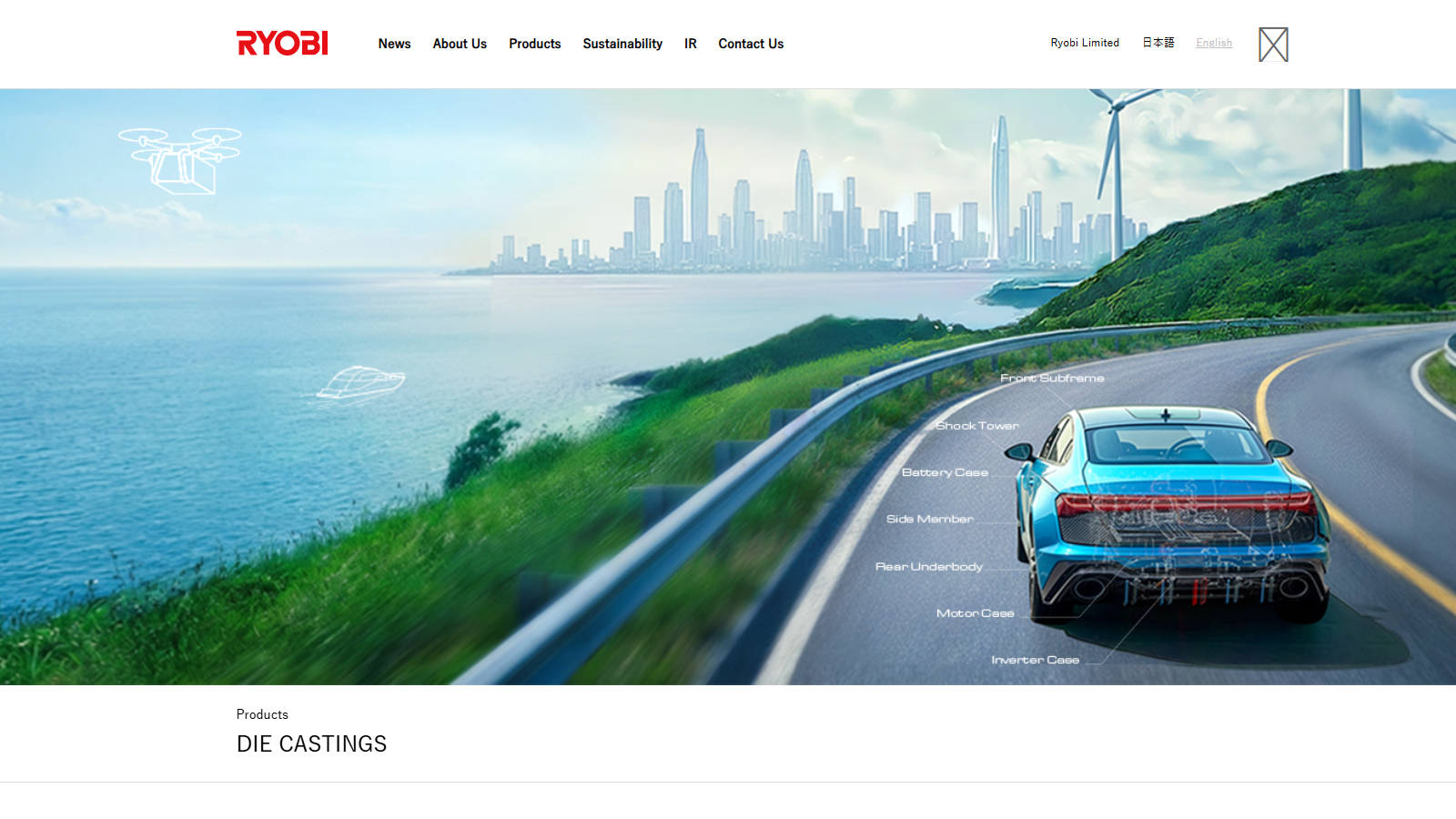
Core Products / Technologies: Ryobi produces aluminum die-cast automotive components, including cylinder blocks, transmission cases, chassis parts, battery cases, motor covers, and gear covers. Its technologies include conventional die casting, high-vacuum die casting, and GD squeeze casting. The company also describes integrated operations covering prototyping, die design, casting, machining, assembly, and inspection.
Why Consider Ryobi Limited: Ryobi is a candidate for buyers needing established aluminum die-casting capabilities and coordinated production processes. Its high-vacuum die-casting technology is designed to reduce gas-related internal defects and support components requiring heat treatment or welding.
Best Suited For: Automotive manufacturers seeking aluminum die-cast powertrain, chassis, and electric vehicle components, particularly projects requiring integrated tooling, casting, machining, and inspection.
Before Purchasing: Confirm the production location, machine range, component dimensions, alloy requirements, and secondary operations. For parts requiring heat treatment, welding, or high mechanical properties, discuss the appropriate casting technology and qualification tests.
6. Bocar Group
Headquarters / Supply Model: Bocar Group is a Mexico-based global automotive supplier with German roots and international operations. It develops and manufactures aluminum and plastic components for automotive customers.
Core Products / Technologies: Bocar's aluminum manufacturing activities include high-pressure die casting and aluminum semi-permanent mold casting. Its products cover components for chassis and body systems, engines, transmissions, drivetrains, electrical propulsion systems, and battery packages. Its semi-permanent mold casting operations use gravity casting processes for powertrain, drivetrain, and suspension components.
Why Consider Bocar Group: Bocar combines aluminum casting expertise with product development and manufacturing support. Its portfolio includes conventional vehicle components as well as parts for electric propulsion and battery-related systems. Buyers can evaluate different casting processes according to component geometry, production volume, and mechanical requirements.
Best Suited For: Automotive OEMs and Tier 1 suppliers sourcing aluminum powertrain housings, chassis and body components, drivetrain parts, suspension components, and electric vehicle castings.
Before Purchasing: Clarify the appropriate casting process, alloy, tooling requirements, machining and assembly scope, inspection methods, production location, and delivery arrangements.
7. AISIN Corporation
Headquarters / Supply Model: AISIN Corporation is headquartered in Kariya, Aichi, Japan. The group develops and manufactures automotive systems and components through a global network of manufacturing companies and specialized facilities.
Core Products / Technologies: AISIN's casting-related manufacturing includes aluminum die-cast automotive components and cast iron parts. Relevant products include transmission cases, engine-related components, and aluminum battery case parts. Its wider automotive manufacturing activities also cover powertrain, chassis, and vehicle body systems.
Why Consider AISIN Corporation: AISIN is relevant to buyers looking for casting capabilities within a broader automotive systems supplier. Its experience in transmission-related components and aluminum battery-frame products provides options for conventional and electrified vehicle programs.
Best Suited For: Automotive OEMs and Tier 1 suppliers seeking aluminum die-cast powertrain components, transmission cases, battery-related structural parts, and components integrated into larger vehicle systems.
Before Purchasing: Identify the relevant AISIN group company and production facility. Confirm the component scope, alloy, casting process, machining requirements, quality documentation, and whether the requested part is available for external sourcing.
8. CIE Automotive
Headquarters / Supply Model: CIE Automotive is a global automotive components manufacturer headquartered in Bilbao, Spain. It operates production facilities and engineering centers across several countries, using a multi-technology manufacturing model to supply automotive components and subassemblies.
Core Products / Technologies: CIE Automotive's manufacturing technologies include aluminum die casting and other casting processes, alongside forging, machining, and metal stamping. Its aluminum casting operations support automotive component production in different regions.
Why Consider CIE Automotive: CIE Automotive offers a geographically distributed manufacturing network and a multi-technology approach. Its casting operations are relevant to buyers looking for aluminum components while also evaluating machining, forging, or other processes within a wider supply program.
Best Suited For: Automotive OEMs and Tier 1 suppliers looking for aluminum cast components, multi-process manufacturing support, and potential regional sourcing options across Europe, Asia, and the Americas.
Before Purchasing: Identify the specific CIE plant and its casting process. Confirm the component family, material, tooling and machining scope, production capacity, quality approval process, and logistics arrangements. Do not assume every facility offers the same technologies or product range.
9. Endurance Technologies
Headquarters / Supply Model: Endurance Technologies Limited is an Indian automotive component manufacturer with manufacturing operations in India and Europe. Its product portfolio includes aluminum die casting, suspension, transmission, and braking systems for two-wheelers, three-wheelers, passenger vehicles, and commercial vehicles.
Core Products / Technologies: Endurance offers aluminum die-cast products manufactured through high-pressure, low-pressure, and gravity casting processes. Its product range includes gearbox and transmission housings, oil cooler housings, clutch housings, engine mounting brackets, rack and pinion housings, crankcases, and alloy wheels. The company also describes in-house design simulation, tooling, and testing capabilities.
Why Consider Endurance Technologies: Endurance combines casting with the production of other automotive systems and components. Its range of casting processes and product categories makes it relevant for buyers sourcing powertrain housings and related aluminum parts.
Best Suited For: Automotive manufacturers and Tier 1 suppliers seeking aluminum cast transmission, engine, suspension, and related components for two-wheelers, passenger vehicles, and commercial vehicles.
Before Purchasing: Confirm the casting method and manufacturing plant. Discuss alloy specifications, part weight, wall thickness, machining requirements, tolerances, testing procedures, production volume, and customer-specific quality approvals.
10. Rockman Industries
Headquarters / Supply Model: Rockman Industries is an Indian automotive components manufacturer and part of the Hero Group. Its manufacturing operations cover aluminum die casting, machining, assembly, painting, alloy wheels, and other automotive component activities.
Core Products / Technologies: Rockman manufactures aluminum die-cast components and offers high-pressure die casting, low-pressure die casting, and gravity die casting. Its product range includes engine and transmission housings, gearbox and clutch covers, structural components, and alloy wheels. The company also provides machining, assembly, and painting.
Why Consider Rockman Industries: Rockman is relevant for buyers looking for aluminum casting combined with downstream component processing. Its use of multiple casting methods allows the manufacturing process to be evaluated according to component geometry, production volume, and mechanical requirements.
Best Suited For: Automotive OEMs and component manufacturers sourcing aluminum die-cast engine and transmission parts, structural components, alloy wheels, and machined or assembled aluminum products.
Before Purchasing: Confirm whether HPDC, LPDC, or gravity casting is appropriate. Provide drawings, alloy requirements, tolerances, machining details, surface finish expectations, annual volume, and inspection standards. Clarify whether painting, assembly, and other secondary operations are included in the quotation.
Key Factors That Affect Automotive Casting Prices
Automotive casting prices depend on material, part design, casting process, tooling, production volume, and secondary operations. Buyers should compare the complete manufacturing scope rather than focusing only on the unit price.
- Material and Casting Process: Aluminum alloys, cast iron, HPDC, LPDC, gravity casting, and sand casting have different costs and performance characteristics. Select the material and process according to component geometry, strength, and production volume.
- Tooling and Part Complexity: Mold size, cavity design, cores, slides, wall thickness, and dimensional requirements affect tooling investment and development time. Complex components may require simulation and additional mold trials.
- Machining and Secondary Operations: CNC machining, heat treatment, surface finishing, coating, leak testing, and assembly can increase the total cost. Specify which operations are included in the quotation.
- Quality Inspection: Dimensional checks, X-ray testing, mechanical testing, metallurgical analysis, and traceability requirements affect production costs. Define inspection methods and acceptance criteria in advance.
- Order Quantity: Prototype orders, small batches, and mass production have different cost structures. Tooling investment and production efficiency should be evaluated against the expected annual demand.
- Packaging and Logistics: Component weight, protective packaging, shipping distance, delivery terms, and export requirements influence the final landed cost.
For an accurate quotation, prepare a 2D drawing or 3D model, material specification, annual demand, machining requirements, quality standards, and delivery destination. Complete information helps manufacturers assess feasibility and provide comparable offers.
FAQs – Automotive Castings
1. What are automotive castings?
Automotive castings are metal components made by pouring or injecting molten metal into a mold. They are used in engines, transmissions, chassis, suspension, and electric vehicle systems.
2. What materials are commonly used for automotive castings?
Aluminum alloys and cast iron are widely used. Aluminum supports lightweight designs, while cast iron is selected for applications requiring specific strength, wear resistance, or thermal properties.
3. What is the difference between HPDC, LPDC, and gravity casting?
HPDC uses high pressure for complex, high-volume parts; LPDC uses controlled low pressure, while gravity casting fills molds by gravity.
4. What quality tests should buyers request?
Use dimensional, X-ray, leak, and material tests as required by the component.
5. What information is needed to request a casting quotation?
Prepare drawings or a 3D model, alloy specifications, estimated annual quantity, machining and finishing details, dimensional tolerances, quality requirements, and delivery location.
6. How can buyers compare automotive casting manufacturers?
Compare processes, materials, tooling, machining, quality, lead time, and cost. Test prototypes before mass production.
Who Is the Best Automotive Castings Manufacturer?
The best automotive casting manufacturer depends on material, process, quality, production volume, and project requirements. Large suppliers suit complex programs, while specialized manufacturers offer customized solutions.
FUERD Machinery supports customized aluminum automotive castings, including casting, mold development, and CNC machining. Confirm its capabilities and quality requirements before ordering.
Share your drawings, alloy requirements, order quantity, machining needs, and inspection standards with FUERD to assess a suitable solution.
Notice: Ensure your image is no larger than 2MB before uploading.